FAQ’S
YOUR QUESTIONS ANSWERED
Frequently Asked Questions
Designing Your Project
-
Absolutely. If you already have drawings, we can provide a quote to get the ball rolling. We are happy to adapt your existing architectural plans to incorporate our beautiful, handcrafted oak frames.
-
Yes, every project begins with a conversation. We offer a complimentary design consultation where we visit your home to discuss your ideas. Our team then creates a full 3D model, allowing you to take a virtual tour of your new building before manufacture begins.
-
Yes. While we specialize in European QPA planed oak , we offer various finishes to suit your taste, from contemporary kiln-dried oak fascias to rustic traditional weatherboarding. We also offer both oak and slim-profile aluminium windows and doors.
Planning & Regulations
-
Requirement for permission depends on your local area and the size of the structure. However, we specialise in navigating these requirements for you. For annexes, we can sometimes utilize the "Caravan Act" to obtain permission depending on the design and intended outcome.
-
Yes. We have extensive experience working with listed properties and buildings in Areas of Outstanding Natural Beauty (AONB). Our in-house expertise allows us to tailor designs to give them the best possible chance of passing the planning process in restricted zones.
-
We do. We remove planning and regulations from your to-do list by handling all applications, building regulations, and structural calculations required for your project.
Construction & Quality
-
We take great pride in our craftsmanship and offer an outstanding 20-year structural guarantee on our buildings for your peace of mind.
-
Our frames are manufactured using the latest technology in a purpose-built factory in Marden, Kent, through our partnership with Trade Oak.
-
We focus on the design, manufacture, and installation of the oak frame and glazing. While your frame is being made, the foundations and base need to be built by a contractor of your choice. We provide them with comprehensive technical drawings and inspect the site before our installers arrive to ensure a seamless process.
Product & Material Specifics
-
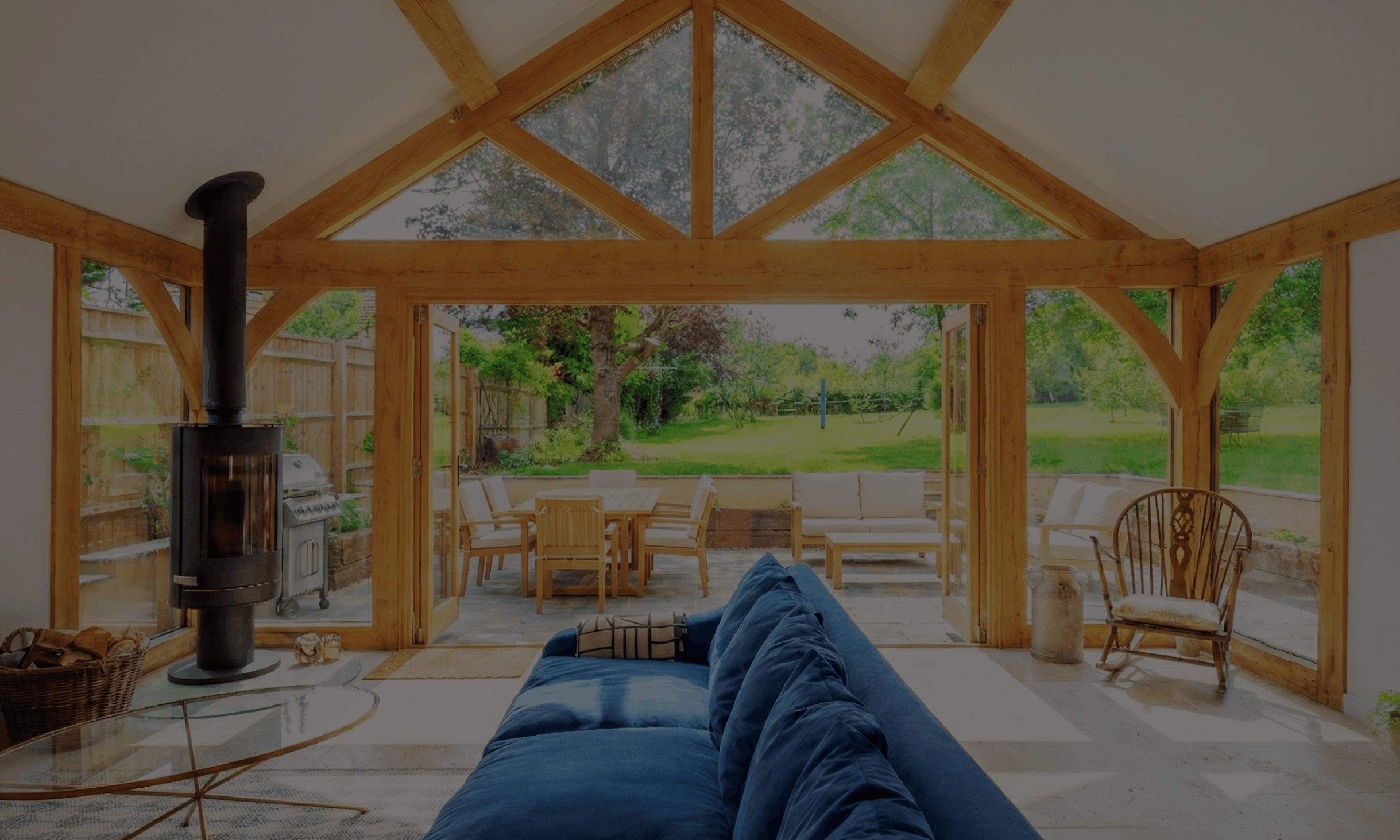
A sunroom is predominantly glass with a pitched roof designed to maximise solar warmth. An orangery features a combination of timber, masonry, and a flat roof with a glazed roof lantern, creating a sense of 17th-century grandeur.
-
Yes. Our modern glazed extensions and garden rooms use advanced construction technologies to ensure they are comfortable in every season—never too hot in summer or too cold in winter.
-
Absolutely. Timber is a natural, resilient material that regulates temperature and humidity better than masonry. It is also more forgiving for horses that kick, significantly reducing the risk of injury.
-
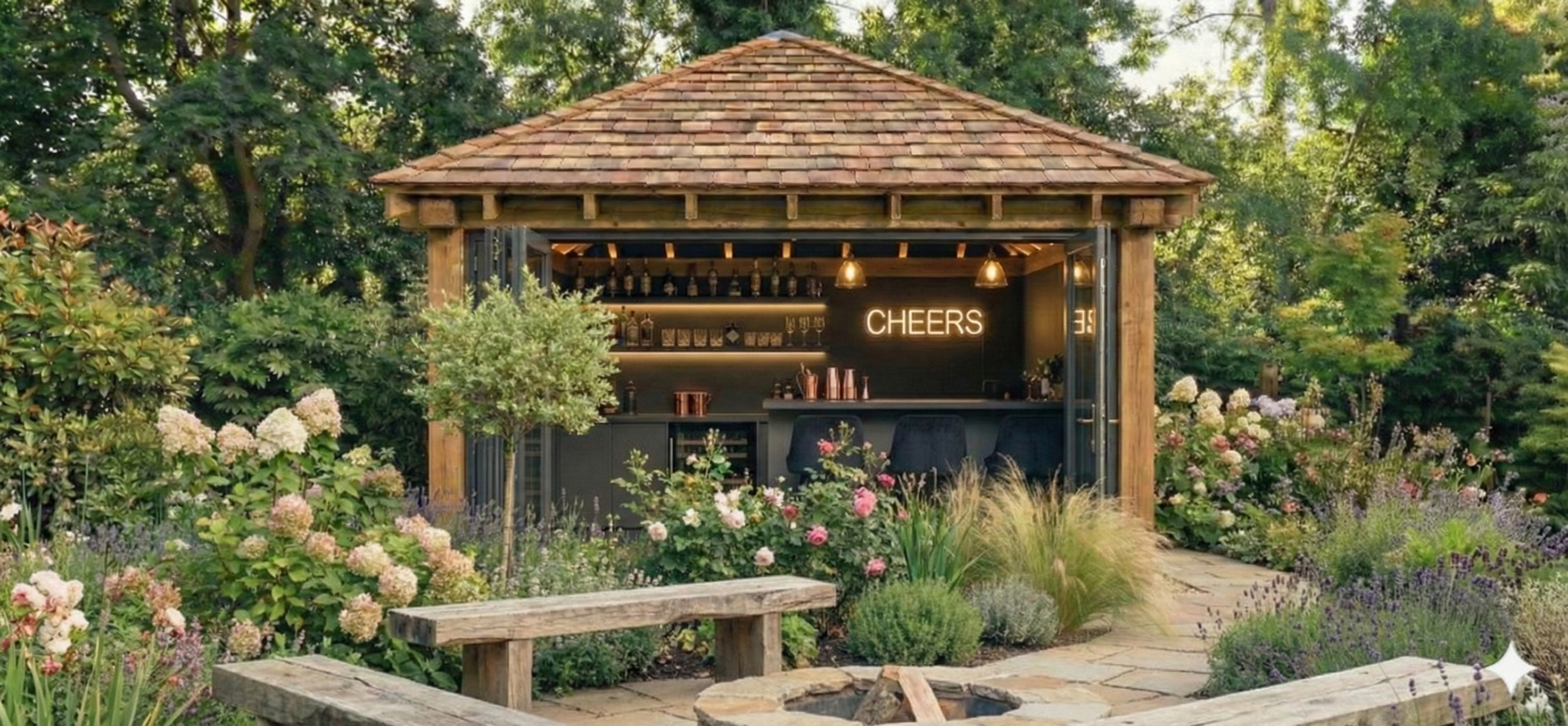
An oak pergola is open and airy, often used as a trellis for climbing plants. If you require complete shade and protection from the rain, an oak gazebo with a solid, permanent roof structure is the better choice.
Logistics & Planning
-
We recommend "The Otterford." It features our lowest ridge height and a rear catslide roof, making it ideal for areas where planning permission might otherwise be problematic.
-
Each of our buildings is independently engineered to ensure full compliance with Building Control regulations. We also handle the structural calculations for you as part of our service.
-
Yes. We can supply our designs, particularly our porches and pergolas, as comprehensive kits with full instructions and precise measurements for your own builder to install.
Maintenance & Longevity
-
Oak is incredibly durable and requires very little maintenance. Most clients choose to let the oak silver naturally over time, though you can apply UV-protective oils if you wish to retain the original honey hue.
-
As a natural "green" product, oak will develop small cracks (known as shakes) as it dries and hardens. This is a natural part of the seasoning process and does not affect the structural integrity; rather, it adds to the unique character and charm of the building.
-
Yes, for structures like our stables, all timber is sustainably sourced and pressure-treated to ensure the building remains solid and safe for decades.
The Build Process
-
Yes. Our buildings are manufactured by the award-winning Trade Oak in Kent, and factory tours are available by request if you would like to see the craftsmanship firsthand.
-
We offer great flexibility. While we use traditional joints, you can opt for a contemporary look using kiln-dried oak fascias and slim-profile aluminium windows in various colours.
-
Our expert installers will erect the oak frame and can also fit any glazing or roof coverings where required as part of the installation stage.
Understanding Our Oak
-
"Green" refers to the freshness of the timber rather than its color. Green oak is cut from trees felled within 18 months and has a high moisture content (60-80%). It is the best choice for structural frames, roof trusses, and posts because it is easier to shape to exact sizes. As it dries, it shrinks slightly across the grain, which actually tightens the joints and improves the overall strength of the frame.
-
Green Oak: Freshly cut with high moisture; it seasons naturally after being fitted, enhancing the building's character and structural integrity over time.
Air-Dried Oak: Timbers stored outside to dry naturally for three to ten years. This results in a lower moisture content (20-30%) and less movement.
Kiln-Dried Oak: Uses heat to accelerate the drying process. While more predictable, it is an expensive process and is typically reserved for flooring, furniture, or mantels rather than structural frames.
-
Yes, and this is a prized feature of oak buildings. Outside, the oak will weather to a beautiful silvery grey. Inside, as the timbers dry, they will naturally develop splits and "checks". This aged appearance is a normal part of the seasoning process, making every building completely unique.
-
Seasoned oak is ideal for projects where movement needs to be minimal or when the timber is 75mm thick or less. We typically use it for glazed panels, window frames, lintels, or when tying a new structure into existing original brickwork. It is not recommended for the main structural beams where timbers need to be 140mm thick or more.
-
Absolutely. All our oak is sustainably sourced from forests and woodlands that carefully manage planting and growth. Furthermore, all structural beams used in our extensions are Q-B-A quality (EN 975-1 approved), ensuring the highest standard for your home.
-
Can’t find the answer to your question?
For anything specific or just to chat through everything with a friendly member of the team give us a call.